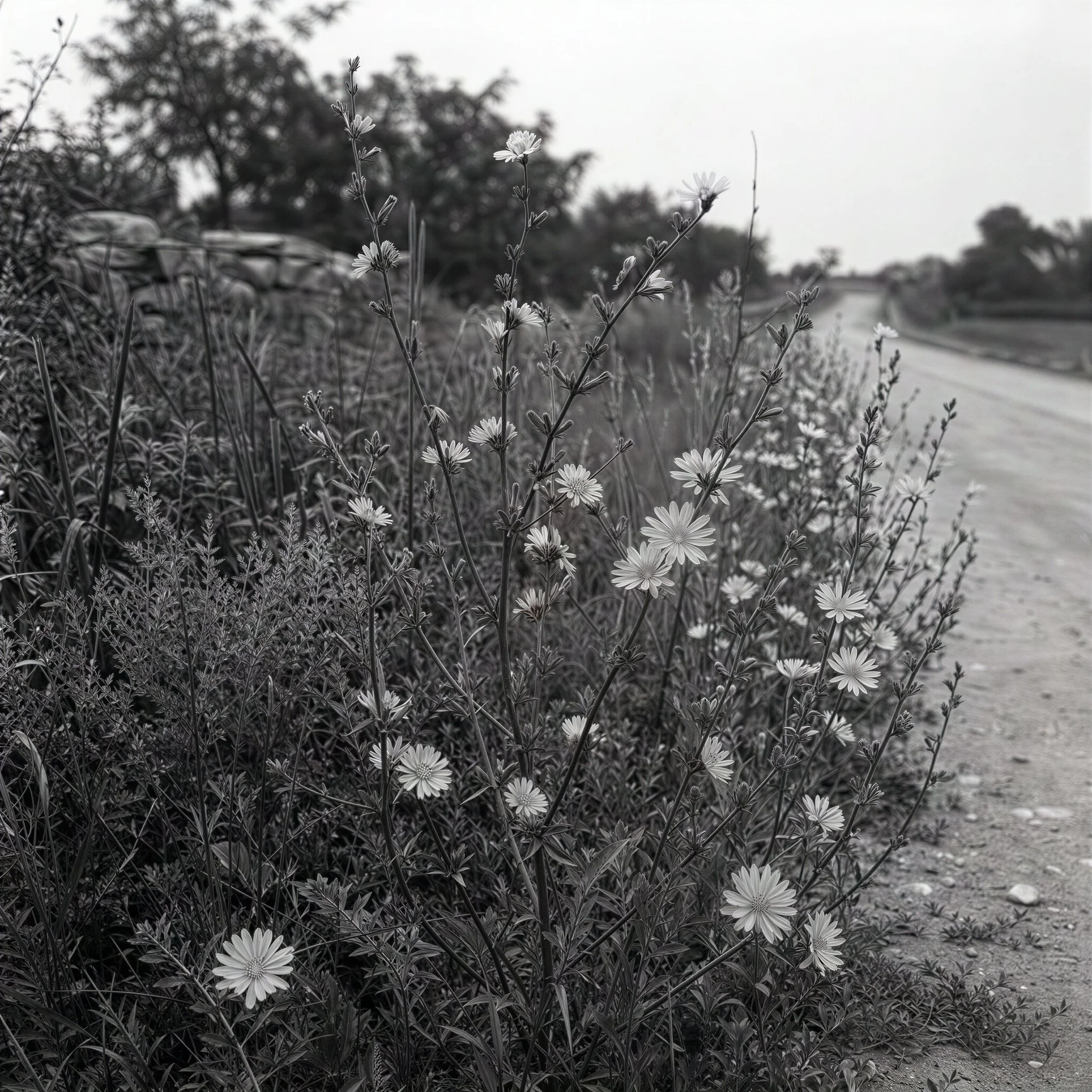
Chicory grows wild along Pennsylvania roadsides, its bright blue flowers appearing every summer as though they have always belonged here.
It is said that in 1000AD a longship of exiled Úlfhéðnar -Odin's wolf-warriors, berserkers who wore wolf pelts into battle and were said to literally possess the spirit and savagery of wolves- sailed further inland via the St. Lawrence River, eventually becoming stranded in the deep valleys of Pennsylvania. They died out as humans, but their curse took root in the soil.
A still stranger account appears in the sixteenth century, when Spanish expeditions pushed northward from the American Southeast toward the Ohio country. Among them were enormous armored war dogs—mastiffs and greyhounds trained for pursuit. One surviving legend tells of a priest attached to a forgotten northern expedition who disappeared after an encounter in the forest with something the surviving Spaniards could only describe as a wolf-man. Three nights later, most of the camp was found dead. The priest was not among them.
Thereafter, Pennsylvania's werewolf stories become considerably more difficult to organize.
Legend has it that early European settlers began to speak of certain parts of the landscape as “Werewolf Patches”—deep, strangely quiet tracts of forest where animals behaved differently after dark and travelers were advised to be home before the moon rose. According to later frontier accounts the Shawnee Native American Tribes called them, "Woods where the wolf-witches walk". Settlers claimed the Seneca called them, "Otkon places, a forest where the darkness has teeth, and chases and bites." The largest of these patches were said to stretch through the wilderness south of Pittsburgh and down to Moundsville, West Virginia, and others farther north, across much of what became Tioga and Lycoming Counties in Pennsylvania. Cursed woods soaked with midnight shape-shifters, it was said. Old storytellers even claimed that the name Lycoming descended somehow from lycanthropy, though historians have been unable to substantiate that delicious possibility.
In the late 1700s, Prince Demetrius Gallitzin came to live among the mountains of western Pennsylvania, in country already rich with supernatural stories. Gallitzin himself became associated with one of the strangest tales of the Appalachian frontier: the famous Wizard Clip, a supposed poltergeist whose unseen scissors mysteriously cut clothing, linens and other household objects. Later versions of the story described some of the cuts as resembling the crescent moon. Gallitzin is said to have mentioned these werewolf tribes in a strange journal whose present whereabouts remain inconveniently unknown.
By the Civil War, another Pennsylvania tradition was growing from the earth itself.
Chicory is a hardy blue-flowered plant whose roasted root has long been blended with coffee, particularly when coffee was scarce, expensive, or needed stretching. Soldiers and families knew the dark, earthy richness it could lend a cup, and Pennsylvania folklore insists that one particularly fine strain became known simply as Werewolf Chicory. Around evening fires, cups were poured and the old stories returned: strange creatures moving through the Lycoming woods, men changed beneath the moon, and isolated patches of forest where sensible people did not wander after dark.
Werewolf Chicory fueled the best theatrical entertainment in every small town America, boasting even the very taste of moonlight.
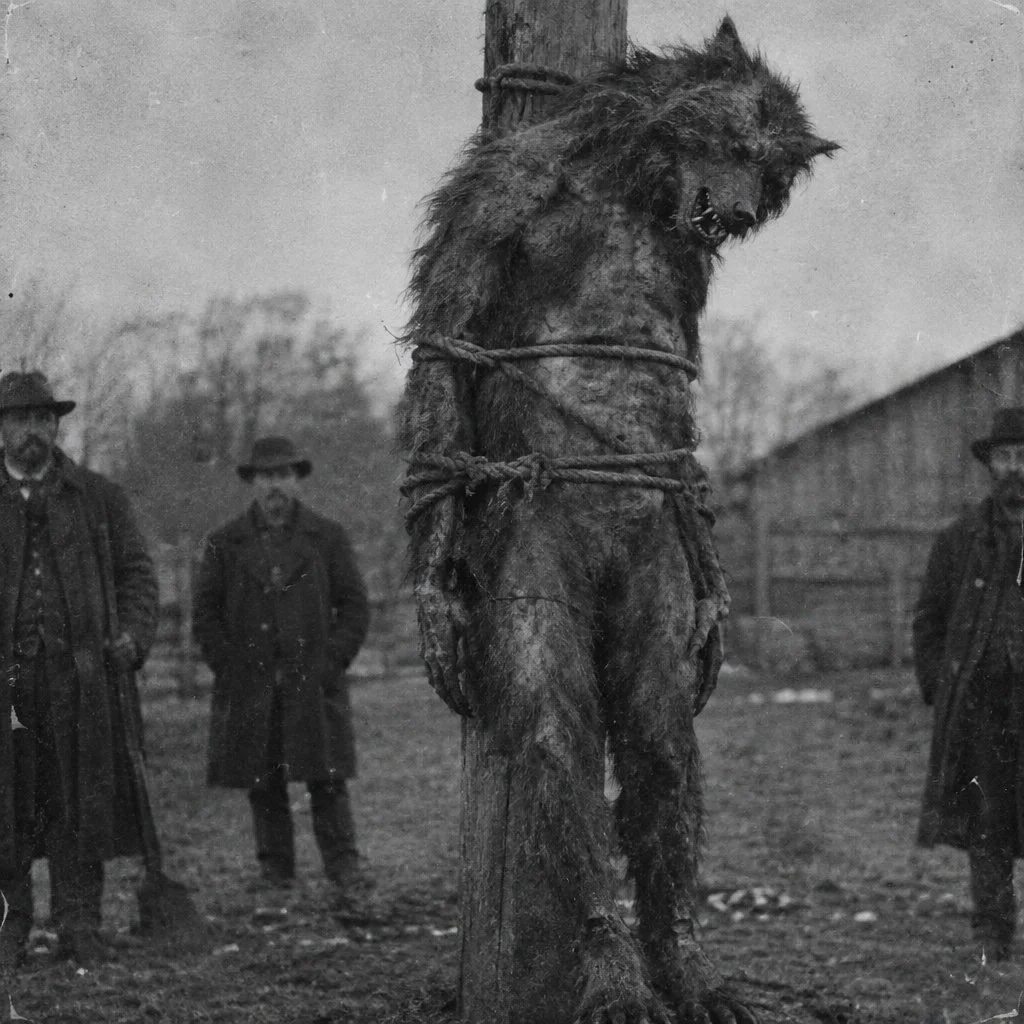
Old photographs attributed to the Ogletown, PA area purportedly document the capture of werewolves—or “strange bears,” as more respectable observers preferred to call them—during the great clearing of Pennsylvania timber used in the rebuilding that followed the Johnstown Flood.
Men were said to have sworn to what they saw, remembering those encounters as among the darkest hunts of their lives. Naturally, no sensible person today believes the photographs are genuine.
In the late 1800s, when talking boards began finding their way into American parlors and fireside gatherings, the questions inevitably followed. Are the stories true? Is something still out there? According to legend, the boards were distressingly enthusiastic.
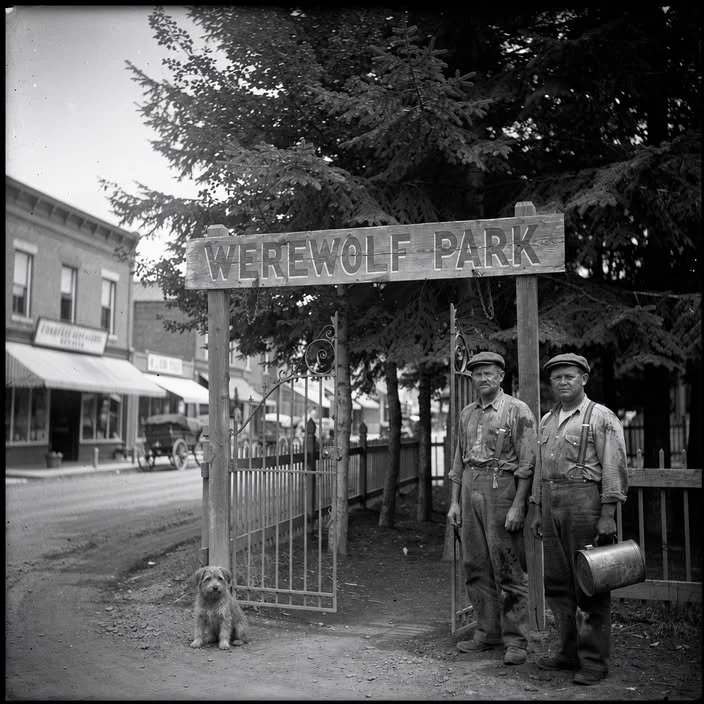
One such patch of trees was said to have survived as a tiny circle of woodland around which the mining town of Windber,
Pennsylvania eventually grew—an area remembered in local lore as Werewolf Park. Later generations vehemently denied that such a place had ever existed.
But who knows?
Even Carl Jung one reporter claimed was eventually drawn into the curious legend, falsely attributed with asking the wonderfully Jungian question: “What does it say about a community that builds its town circling a tiny forest?”
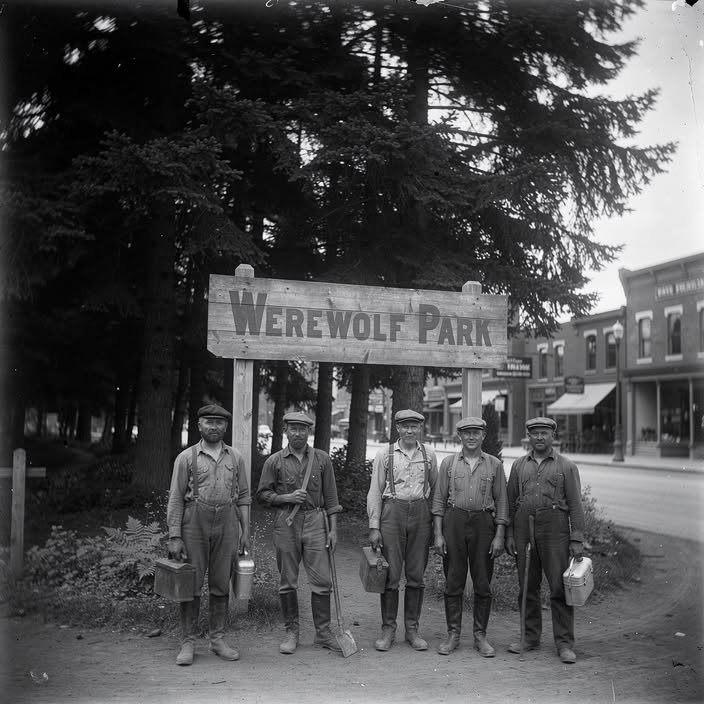
Whether history, folklore, campfire exaggeration, or something glimpsed briefly between the trees, the werewolf has never entirely left Pennsylvania.
Neither has the chicory.

And then came one man, Edward Goth. Curator of Curious Things, historian of the impossible, and a once famed entrepreneur who has spent the majority of his life investing in matters sensible people know better than to investigate -like werewolves and chicory, has made it his business to gather what remains of both. Goth began collecting the scattered remains of the Werewolf Chicory story. His conclusion? "Stay curious, my friends."
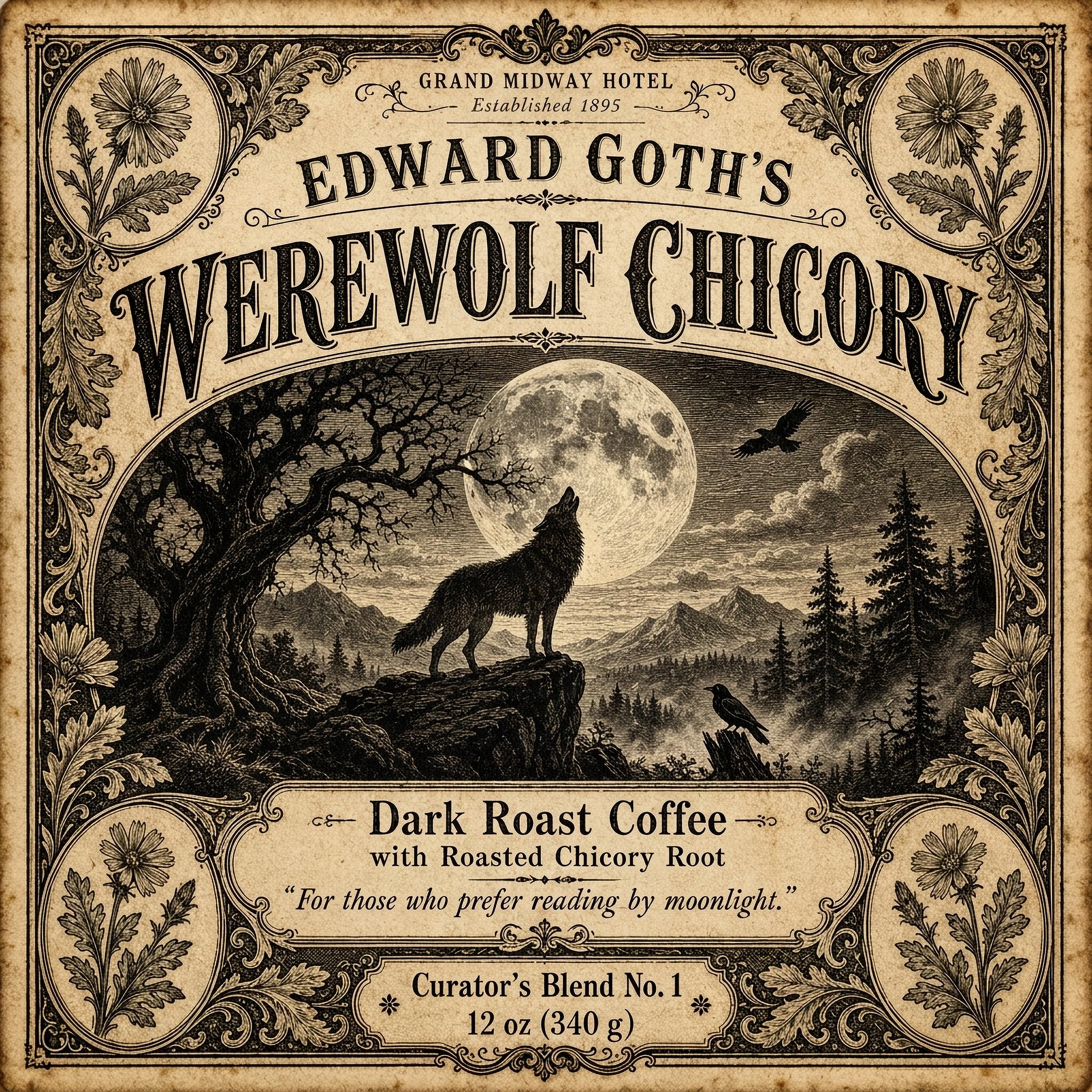
Today, at the Grand Midway Hotel, we are proud to raise a cup to this whole peculiar tradition with Edward Goth’s Werewolf Chicory—dark coffee enriched with roasted chicory, made for late nights, old stories, strange company, and anyone who has ever wondered what might still be wandering just beyond the firelight.
WEREWOLF CHICORY
Experience the Taste of Moonlight